
Reverse air duct cleaning, a method admired for its specific approach to purging air ducts of dust, dirt, and other particulates, sparks interest and concern among homeowners.
It involves a unique technique that aims to ensure thorough cleaning by dislodging dust and debris from the ductwork.
Critics, however, debate the safety of this method, suggesting it might compromise the integrity of the vents.
Today, we’ll delve more into the nuances of reverse air duct cleaning, weighing its risks against its benefits to provide you with a clearer understanding.
Keep reading to unravel whether this method aligns with the needs of your home’s heating, ventilation, and air conditioning systems.
Understanding Reverse Air Duct Cleaning Methods
Reverse Air Cleaning is distinct from traditional means. It harnesses the power of reverse airflow technology to eradicate dust, debris, and other contamination agents like mold and mildew.
As we break down the principles of reverse airflow and draw comparisons between the conventional and reverse air duct cleaning techniques, understanding the intricacies of this method will help you to better decide what is the best fit for your property.
The aim is to discern whether reverse air offers a safer, more efficient route to ensuring the cleanliness and functionality of ventilation systems without jeopardizing the integrity of the vents.
The Principles of Reverse Air Flow Technology
At its core, reverse airflow technology operates on a simple yet effective principle. It creates a powerful suction force that reverses the normal direction of air movement through the duct system. This innovative approach acts like a vacuum cleaner that pulls dirt, dust, and other particulates from every nook and cranny of the ventilation network. It uses a compressor with compressed air, mostly connected to a truck-powered vacuum cleaner, to suck dust and debris out of the air ducts.
By flipping the airflow direction, this method ensures that even stubborn debris is dislodged and removed from your heating and air conditioning systems.
- Initiates a strong suction effect that targets debris accumulation
- Reverses traditional airflow direction to enhance debris removal
- Ensures comprehensive cleaning of the duct system, promoting air quality and system efficiency
Comparing Traditional and Reverse Air Duct Cleaning
Traditional methods often involve mechanical brushes and vacuum systems working in the natural direction of airflow to remove dirt and debris.
In contrast, reverse air duct cleaning uses suction technology that pulls air in the opposite direction, with the goal of a deeper clean. This comparison isn’t just about which method can remove the most dirt; it’s about understanding the potential impact on the ductwork’s integrity and the overall air quality in your home or office:
- Blind, single-point suction methods can miss debris baked onto the duct walls, because nothing physically scrubs the surface.
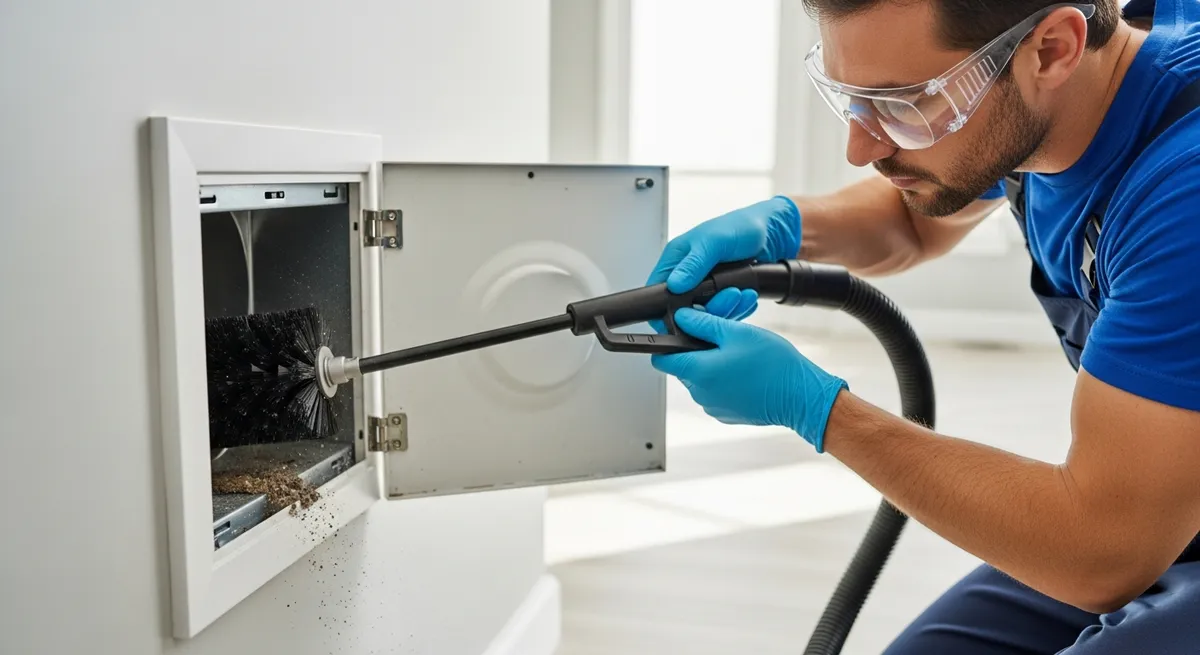
- The direct-contact brush-and-vacuum method we use dislodges that build-up with a spinning brush and captures it at the source, enhancing indoor air quality.
- Because the suction is applied right at the brush head instead of pulling hard on the whole system, direct contact protects older and flexible ductwork and safeguards the ventilation system’s longevity.
Risks Associated With Reverse Air Duct Cleaning
Dirty air ducts result in indoor air pollution, which can come with several risks, including expensive repairs and health problems. When the accumulated dust and other particulates clog the air filters, it means that even harmful bacteria, mold, and fungus particulates can get into your home’s air circulation. That’s why air duct cleaning services become paramount.
But is reverse air duct cleaning the way to go?
Well, an air duct cleaning mission, especially using reverse air technology, comes with its own set of considerations to ensure the structural integrity of your ventilation system is not compromised.
Specifically, the potential for damaging older or more fragile vents emerges as a significant concern, coupled with the risks associated with improper handling and use of specialized equipment.
Furthermore, applying excessive pressure during the cleaning process poses a real threat to the ductwork, potentially causing more harm than good.
These aspects deserve a detailed examination to fully understand how reverse air duct cleaning works. While advantageous in many ways, it requires precise knowledge and execution to avoid unintended consequences on your home’s ventilation system.
Potential for Damage to Older or Weaker Vents
Exploring the potential for damage to older or weaker vents through reverse air duct cleaning is the largest concern about the reverse air method. Virginia Beach and Norfolk have older residences and some of the historic structures may not perform well. The concern is that the vents may not withstand the powerful suction and pressure changes introduced by this method.
The unique dynamic of reversing the airflow can exert undue stress on ductwork that has seen better years or was constructed with less durable materials. If you have an older home you should employ top-quality duct cleaning experts who use gentle, direct-contact methods rather than high-pressure reverse air, which can save you from much more significant repairs.
- Older ventilation systems may lack the structural integrity to handle the pressure changes of reverse airflow.
- Less durable materials can suffer from cracks or breaks due to the intense suction used in reverse air duct cleaning.
- Ensuring a professional evaluation before undertaking reverse duct cleaning procedures is essential to protect vulnerable ductwork.
The Issue of Improper Use of Equipment
The issue of improper use of equipment arises as another significant concern when it comes to reverse air duct cleaning. The specialized equipment required for this method, when not handled by experienced professionals, can lead to complications, from inefficient cleaning to the potential for damage to the ventilation system itself. Ensuring that your technicians are well-trained and knowledgeable about the process is pivotal for the safety and longevity of a home’s ductwork.
| Consideration | Importance |
|---|---|
| Expert Handling of Equipment | Critical for avoiding duct damage |
| Efficiency of Duct Cleaning | Dependent on proper equipment use |
| HVAC System Longevity | Can be compromised with improper technique |
How Excessive Pressure Can Harm Your Ductwork
Applying too much pressure during reverse air duct cleaning can be detrimental to your ductwork, risking more than just a superficial clean. This excessive force can lead to the bending or collapsing of ducts, especially in areas where they may already be weakened by age or wear. Look towards any seams, turns, or joints in your ductwork as potential weak spots. Also, look at where the ducts have been sealed against a different material as areas where damage may occur. Whomever you hire should begin with a thorough walk-through of your ducts to make sure they are recommending the method that will solve your problem and minimize the risk of larger projects.
Why We Use Direct Contact Instead of Reverse Air
Some companies favor reverse air because its whole-system suction can pull loose debris from long runs. But suction alone does not scrub the caked-on dust, dander, and construction debris that humidity bakes onto duct walls over time — and pulling hard on the entire system can stress older or flexible ductwork.
That is why we use the direct-contact brush-and-vacuum method. A specialized spinning brush physically scrubs each run clean while a HEPA-filtered vacuum sits right behind the brush head, so debris is captured the instant it is dislodged. It delivers a deeper clean without the aggressive pressure, and without leaving a mess in your living space.
For anyone serious about their health or meeting HEPA standards, direct-contact cleaning captures 99.97% of particles down to 0.3 microns at the source, so allergens and mold spores are trapped in the machine rather than blown back into your home.
| Key Benefit | Impact on Indoor Air Quality |
|---|---|
| Mechanical Scrubbing | Removes caked-on contaminants suction alone leaves behind |
| Source Capture | Traps debris at the brush head — no mess in your home |
| Gentle on Ductwork | Protects older and flexible ducts from pressure damage |
How to Prevent Damage During Duct Cleaning Procedures
The best way to prevent damage before reverse air cleaning is to run a comprehensive initial inspection of the ductwork before suction.
This steps identifies vulnerabilities and allows you to know or suspect where damage may occur during operation. You may even find that reverse air is too much for the specific needs and conditions of your ventilation system.
The Importance of Initial Ductwork Inspection – Do NOT skip this!
The significance of conducting an initial inspection of ductwork before embarking on a reverse air duct cleaning procedure is important. This step allows professionals to assess the condition of the system, identifying any vulnerable areas that could be adversely affected by the cleaning process. It ensures that the approach tailored for each home contributes to the home while preserving the integrity and longevity of the ventilation system.
Customizing Cleaning Techniques to Your Ductwork’s Needs
Whether you are doing. ityourself or hiring a profesisonal, the ductwork technique should be customized to the state of your home. Not every home can handle the same cleaning method and it is only the incompetent or the lazy in our industry who bring a single set of equipment to every jobsite regardless of size, age, or system. Trained teams like at Universal Duct Cleaning carefully evaluating the material, age, and design of your ductwork, to select the appropriate tools and methods.
Changes could include varying the suction power or choosing softer cleaning brushes to effectively clean without causing harm. Duct cleaning is far from a one-size-fits all process.
Tips for Homeowners to Prepare for Safe Duct Cleaning
Before the scheduled air duct cleaning, homeowners canmake it easier. andsafer for their technicians by clearing the area around vents and access points. This provides ample space for professionals to condust visual inspections and cleaning.
Additionally, communicating any known issues or concerns about the ductwork beforehand allows the cleaning team to adjust their methods accordingly, and move conservatively. It’s very expensive to fix a broken HVAC system or replace vents so sharing more information about your home is always going to be better.
Identifying Signs of Potential Weakness in Your Ductwork
There are some visible signs you can look out for before cleaning your ducts. Cacks or rust on the duct surfaces and unusual airflow patterns hinting at internal obstructions serve as red flags.
- Visible cracks or rust on duct surfaces indicate material degradation.
- Unusual airflow patterns may suggest hidden blockages or leaks.
- Addressing these signs before cleaning helps protect duct integrity.
Main Problems of Ducted AC Systems
Ducted air conditioning systems are a popular choice for home and office cooling, but they can encounter various problems that can affect their efficiency and performance. Here are some common issues faced by ducted air conditioners:
Restricted Air Flow
One of the most prevalent problems in ducted air conditioning systems is restricted airflow. This can be caused by several factors, including blocked air filters, obstructed air vents, or kinked or crushed ductwork. Restricted airflow reduces the system’s ability to circulate cool air effectively, leading to uneven cooling and increased energy consumption.
Dirty Clogged Air Ducts
Over time, air ducts can accumulate dust, dirt, and other particle debris, which can restrict airflow and reduce the system’s efficiency. Clogged air ducts can also harbor allergens, bacteria, and other pollution, leading to poor indoor air quality and potential health issues.
Besides the contaminants, dirty air ducts can reduce the efficiency of your system. This means the static pressure of your system will be higher, requiring your hvac system to use more energy to achieve the optimal temperature. When a system strains to reach optimal temperatures, there is more wear and tear. This means a shorter lifespan and increased repair costs.
Condensation
Ducted air conditioning systems rely on a condenser to remove moisture from the air. However, if the condensate drain line becomes blocked or the condensate pan overflows, it can lead to water leaks and potential water damage.
Additionally, excessive condensation can promote mold growth within the system, further compromising indoor air quality. Poor insulation or proximity of the ducts to the roof during winter can cause condensation.
Air Loss
Air loss in ducted air conditioning systems can occur due to various reasons, including leaks in the ductwork, poorly sealed connections, or damaged insulation. Air loss can significantly reduce the system’s cooling capacity, leading to higher energy consumption and increased running costs.
Moisture
Moisture in air ducts can be caused by various factors, including condensation from cooling coils, plumbing leaks, high humidity levels, or even using your clothes dryer. Condensation is a common issue that occurs when warm, humid air comes into contact with the cold surfaces of the air conditioning system. It is a very common issue in Virginia Beach and Hampton Roads area.
Moisture in the ductwork promotes mold growth and compromises indoor air quality. It also makes it easier for particles to accumulate in the vents, raising the static pressure, and causing the system to overrun. Proper insulation and dehumidification measures are crucial to prevent moisture buildup in air ducts.
Signs that Your Ductwork Needs Cleaning
Determining whether your ductwork needs cleaning is crucial for maintaining a healthy indoor environment and ensuring the efficient operation of your HVAC system. Here are some telltale signs that indicate it’s time to consider duct cleaning:
1. Visible Dust and Debris
If you notice an excessive amount of dust or debris accumulating around the air vents or registers, it’s a clear indication that your ductwork is harboring contaminants. This buildup can be a breeding ground for allergens, bacteria, and other pollutants, which can circulate through your living spaces and compromise indoor air quality.
2. Increased Allergies or Respiratory Issues
If you or your family members experience frequent allergies, respiratory problems, or unexplained illnesses, it could be a sign of poor indoor air quality caused by dirty ductwork. Contaminants like mold, dust mites, and pet dander can accumulate in the ducts and trigger allergic reactions or exacerbate existing respiratory conditions.
3. Unpleasant Odors
If you notice musty, stale, or unpleasant odors emanating from your air vents, it’s likely that your ductwork is harboring mold, bacteria, or other organic materials. These odors can be a nuisance and may indicate the presence of larger underlying issues within the duct system.
4. Inconsistent Airflow
If certain rooms or areas of your home receive inconsistent or inadequate airflow, it could be due to obstructions or blockages within the ductwork. Debris buildup can restrict airflow, leading to uneven temperature distribution and decreased system efficiency.
However, with inconsistent airflow, you should also confirm first that the thermostat is working or set to the right temperature.
5. Visible Mold or Pest Infestations
If you notice visible signs of mold growth or pest infestations around your air vents or ductwork, it’s a clear indication that professional duct cleaning is necessary. Mold and pests can not only damage your HVAC system but also pose serious health risks to occupants.
Looking for a Great Duct Cleaning Company? Call Universal Duct Cleaning
Universal Duct Cleaning is the leader when it comes to customized duct cleaning solutions in Virginia Beach. They have a well-trained staff who use a multitude of duct cleaning techniques to match the vent system and age of each client’s home. Rather than relying on negative air machines, they use the direct-contact brush-and-vacuum method — scrubbing each run clean and capturing debris at the source — tailored to the size, age, and design of every home. As a family-owned business local to Virginia Beach, Universal Duct Cleaning is a great choice for a duct cleaning partner.
Contact them today and get your air ducts cleaned the right way.
FAQ
Who cleans air ducts?
Air duct cleaning is typically performed by professionalduct cleaning companies (like us). These companies have trained technicians and specialized equipment to properly clean and sanitize residential and commercial air duct systems.
Can air duct cleaning cause damage?
Yes, air duct cleaning can potentially cause damage if not done properly by an inexperienced or unqualified technician. Improper techniques or equipment can dislodge and spread debris, damage ductwork, or contaminate the HVAC system.
Does air duct cleaning reduce dust?
Yes, professional air duct cleaning can significantly reduce the amount of dust, dirt, and other particulates circulating through your HVAC system and into your living spaces. This can help improve indoor air quality and reduce dust buildup in your home.
Can air duct cleaning remove mold?
Professional air duct cleaning services can remove mold growth within the ductwork if proper techniques and antimicrobial treatments are used. However, if there is a significant mold infestation, additional remediation measures may be necessary to address the underlying moisture issue.
Will air duct cleaning remove smell?
Yes, professional air duct cleaning can help remove persistent odors and musty smells that originate from the HVAC system or accumulate within the ductwork. The cleaning process removes the source of the odor, and specialized treatments can further eliminate lingering smells.
Serving Virginia Beach — the Total Home Health Way
Universal Duct Cleaning is a local company, and our technicians are in Virginia Beach neighborhoods like Pungo / Blackwater, Lynnhaven, and Woodhouse Corner every week. If you live nearby, visit your neighborhood page to see recent jobs, local reviews, and service details for your area.
Duct cleaning is one part of our Total Home Health approach. Because pests and rodents are a leading cause of contaminated ductwork, we work hand in hand with our sister company Universal Pest & Termite — so if an inspection turns up droppings or nesting in your vents, one call handles both problems.