
A rainy spring or humid summer does not prove that moisture entered a home's ducts or that mold is growing there. Condensation or water damage should be investigated at the source; cleaning alone cannot repair a leak or correct humidity.
What to inspect after a damp season
Look for an active leak, visible water, wet insulation, a blocked condensate drain, or a duct connection that has come loose. EPA says to dry water-damaged areas and items within 24–48 hours to help prevent mold growth. That advice is not a rule that mold will grow inside ducts in exactly that time.
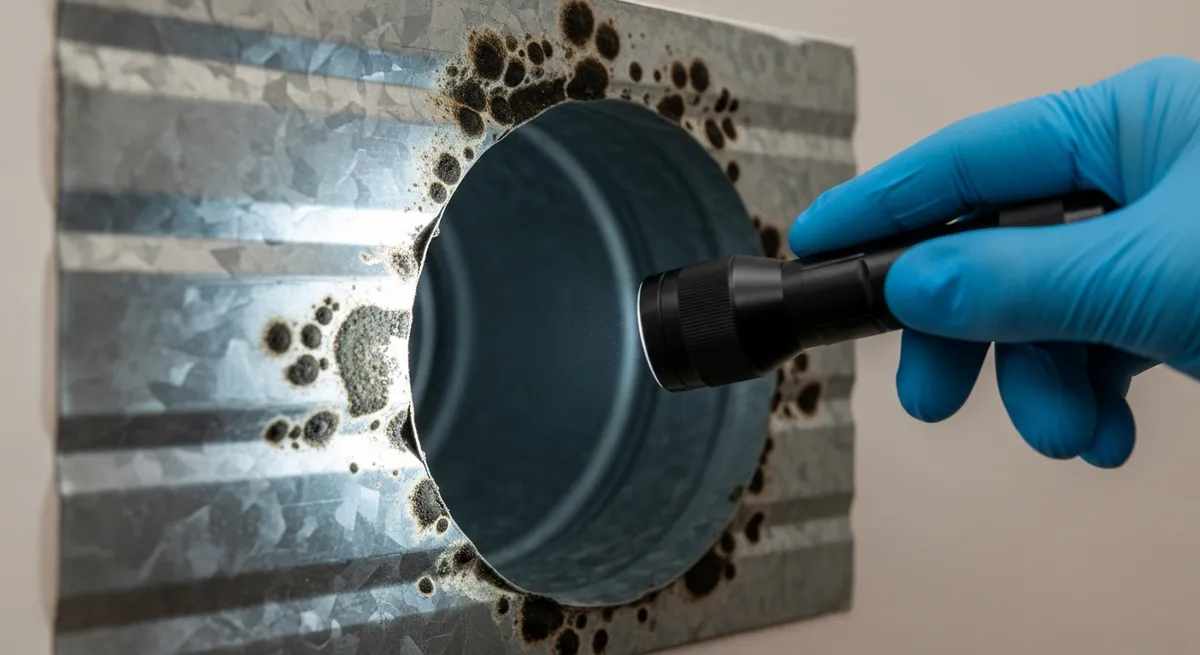
EPA says substantial visible mold inside hard-surface ducts or HVAC components may warrant cleaning. Wet or moldy duct insulation cannot be effectively cleaned and may need replacement. Symptoms or odors alone do not confirm mold or show that ducts caused a health concern.
Local next steps
In Hampton Roads neighborhoods such as Little Creek, a photo inspection can document an accessible duct concern before service is recommended. If the concern is a pest entry point rather than duct debris, Universal Pest in Virginia Beach serves the region. Compare the tier-specific benefits of the Total Home Health plans.